




Introduction
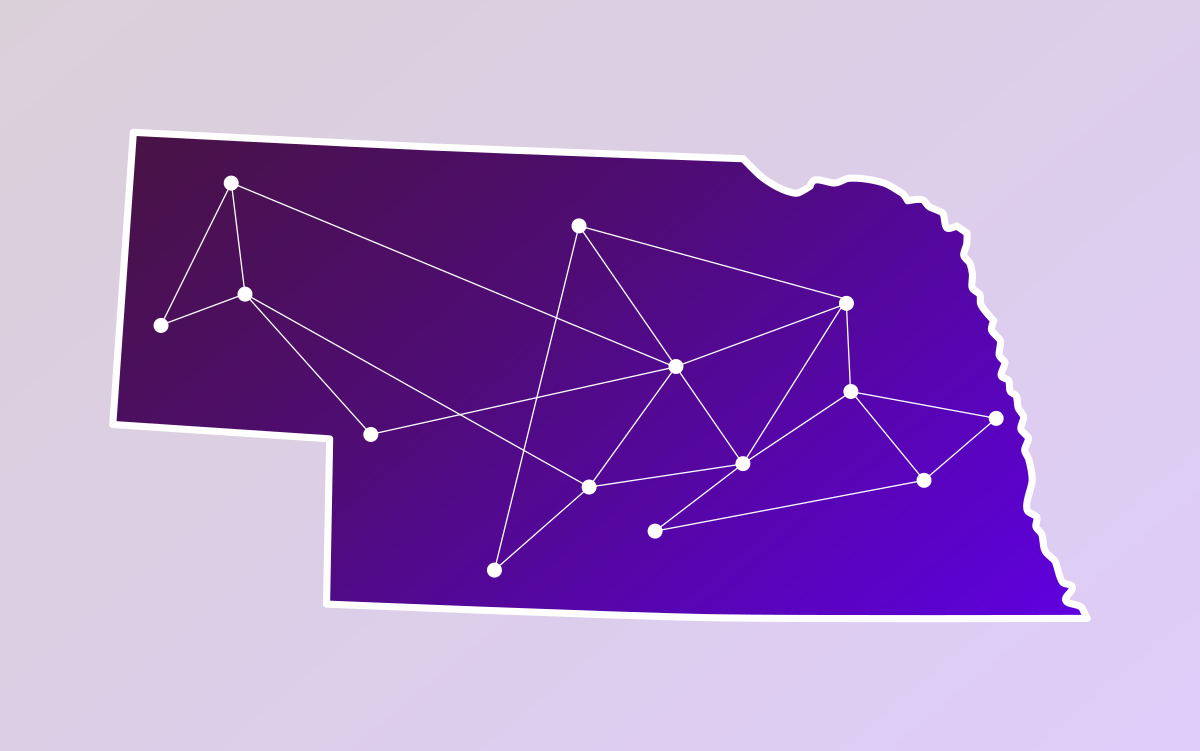
Nebraska reduced the time districts spend on compliance reporting by implementing the Ed-Fi Data Standard to change how information is submitted and shared.
District staff no longer manage manual submissions. Instead, systems update and share information automatically, giving staff more time to support schools, work with educators, and address student needs earlier.
Challenge
Before this change, compliance reporting consumed significant time from Nebraska’s districts. Staff pulled data from multiple systems, formatted files manually, and corrected errors after submission. These processes repeated throughout the year, taking time away from supporting schools and students.
Because reporting was slow, districts often could not act on issues until after deadlines passed.
Goals
Nebraska set clear goals for its modernization effort:
- Simplify how public districts would submit student-level information for accountability, funding and reporting purposes.
- Reduce the time district staff spend preparing and correcting submissions.
- Return timely information to districts so they can see how their data is used.
- Stay closely aligned with the Ed-Fi Data Standard to limit complexity and support consistent vendor integrations.
Success would mean faster reporting, lower administrative burden, and clearer insight for districts and the state.
Implementation Process
A State-Led Modernization Effort
Nebraska launched its modernization effort with support from a federal Statewide Longitudinal Data Systems grant.
The state adopted the Ed-Fi Data Standard so student information systems and other tools could share data automatically. This approach replaced many of the manual file uploads districts previously managed.
Returning Value to Districts
Nebraska designed the system to return useful information back to districts, not just collect it. Advisor dashboards show near real-time data alongside the calculations that affect funding, such as average daily membership.
With this visibility, districts can check data earlier, correct issues before deadlines, and better understand how reporting connects to funding decisions.
Staying Close to the Core
Nebraska is recognized as one of the most closely aligned implementations of the Ed-Fi Data Standard. By limiting custom extensions and maintaining discipline around the core standard, the state reduced complexity for districts and vendors. This approach makes the system easier to maintain and upgrade over time.
Clear Vendor Expectations
Nebraska maintains consistent communication with a small group of vendors. Major upgrades occur on predictable timelines to reduce disruption. Vendors follow standard implementation patterns rather than building custom solutions for each district.
The state has also required assessment vendors to connect through the Ed-Fi API. Once built, those integrations can be used statewide without district-by-district customization.
Results
Nebraska’s modernized system has produced clear improvements for districts and the state:
- District staff spend far less time preparing compliance reports and correcting submission errors. Many reporting tasks that once required manual file preparation now occur automatically.
- Districts can more easily submit accurate student-level information for reporting and gain faster insight into how it drives funding and accountability.
- This visibility helps districts address issues earlier and improves confidence in reported information.
- For vendors, consistent expectations and alignment with the Ed-Fi Data Standard simplify integration and reduce long-term maintenance costs.
Success Factors
Several factors helped Nebraska succeed:
- Strong state leadership kept the effort focused and well supported.
- Clear communication with vendors and districts created predictable expectations for implementation and upgrades.
- A disciplined approach to the Ed-Fi Data Standard limited unnecessary customization.
- Most importantly, Nebraska designed the system around district capacity and real reporting needs.
Lessons Learned
Nebraska’s experience highlights several important lessons:
- Solve the most painful problems first: Nebraska focused on funding and accountability reporting because those processes created the greatest burden for districts.
- Consistency reduces complexity: Staying closely aligned with the Ed-Fi Data Standard made the system easier for vendors to support.
- Transparency builds trust: Returning information back to districts improved confidence in reporting.
- Predictability matters: Clear timelines and expectations reduced disruption for districts and vendors.
Use Cases
Nebraska’s modernized data system now supports several practical use cases across the state:
- School funding calculations: Districts can see how student data, including enrollment and program information, contributes to the state funding calculations.
- Error validation and reporting: Real-time validation and reporting help districts fix errors quickly, improve data quality, and make faster, informed decisions.
- Accountability reporting: Faster reporting improves transparency and confidence in state accountability results.
- Assessment integration: Assessment vendors connect once through the Ed-Fi API, eliminating district-level customization.
- Operational planning: District teams spend less time managing compliance and more time supporting schools.
Conclusion
Nebraska’s experience shows how improving how schools share information can reduce reporting burden while strengthening transparency and trust. Districts now spend less time preparing reports and more time supporting educators and students. State leaders receive faster and more reliable information for funding and accountability decisions.
By implementing the Ed-Fi Data Standard with discipline and clear communication, Nebraska built a system that works for districts, vendors, and the state. The result is simpler reporting, clearer insight into school funding and accountability, and more time for educators to focus on helping students succeed.